Processing costs
Operations are accounted for in tokens. Cost depends on the processing type, selected video duration and quality mode.
From AI photo and video processing to a paid service with a personal media library, token billing and management tools.
A commercial service needs more than an AI photo and video integration. Users need to understand how to prepare their files, what each operation costs, how processing is progressing and where to find the result. Owners need tools for managing pricing, customer accounts and support.
The project's task was to connect these processes in a single platform, from uploading source files and recording payments to delivering results and handling enquiries.
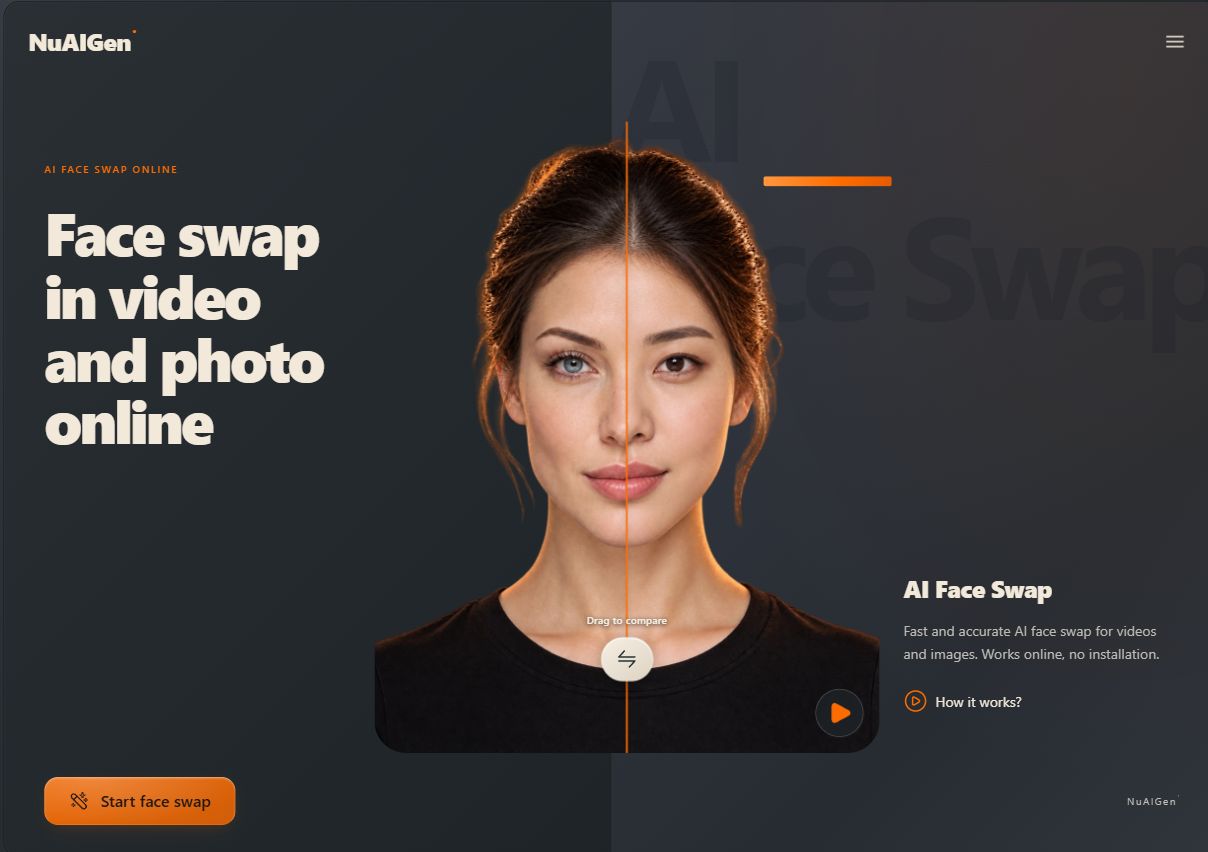
IT SYNERGY.DEV developed a customer workspace where users upload a face photo and a target photo or video, choose settings and start a face swap. Video options include a preview, a clip of up to 10 seconds and HD mode.
Processing takes time, so it runs as a separate task with a status. Once complete, the result appears in the media library and the user receives a notification. Source files and results can be viewed, downloaded and deleted.
Before processing starts, the system checks source material compatibility for face replacement. It evaluates image suitability to reduce unsuccessful results and avoid spending tokens on clearly unsuitable inputs.
A key challenge was sending materials to an external processing provider while retaining control over user file access. The system creates temporary signed links to the specific source files required for a task, without exposing the entire storage.
Uploaded and generated files are encrypted. Access goes through the application server, with storage quotas and data removal when an account is deleted.
Before processing, the system checks photo format, dimensions, face presence and count, and image quality. The selected video clip is prepared on the server.
Operations are accounted for in tokens. Cost depends on the processing type, selected video duration and quality mode.
Users can add funds, purchase token packages and view transaction history. Bank card and cryptocurrency payments are supported through crypto processing. Payment confirmations are recorded and linked to balance top-ups.
Generation status, token accounting, file readiness and user notifications are connected. Provider responses are matched to the customer's specific task before its state is updated.
The workspace includes a ticket system so users can report a problem immediately. Each request becomes a support task, keeping correspondence and resolution progress in one place.
This shortens the path from discovering an issue to reaching a specialist. The team can organise requests more easily, while users do not need to find another contact channel or repeat the situation to different employees.
The support team has a shared ticket list with search and filters for dates, operators and priorities. Each ticket shows its assignee, status, priority and SLA timer, helping distribute workload, identify urgent issues and monitor response deadlines.
Customers, support staff and administrators work in a shared environment. User roles determine the available sections, data and actions: customers see tools for their work, while the service team sees platform management capabilities.
A shared interface foundation lets the team reuse screens and components instead of building separate accounts with duplicated logic. This reduces development effort and simplifies maintenance: changes to shared elements do not have to be repeated for every role.
The interface remains clear for each participant. Users are not burdened with internal menus, and employees do not need to switch between disconnected systems to handle customer enquiries and manage the service.
Administrators manage users, balances, packages and generation pricing, handle requests and configure support response times. FAQ management, notification settings and an overview of service activity are also available.
The analytics screen demonstrates how metrics and trends are presented. The illustration uses demonstration data.
The platform combines a customer workspace, photo and video face-swap integration, media library, token billing, payments, support and an administrative panel.
The user journey from preparing source files to receiving results is connected to service management tools, providing a foundation for operating and developing a paid product.
Photo and video processing is integrated with an external provider, selected through environment settings. Text-to-image generation is under development and is not listed as a completed feature.
Tell us about your project. We will get back to you to discuss the details.